
Grandstream GXW4200 v2 Review: The 48-Port FXS Gateway That Rescues Every Analog Tail
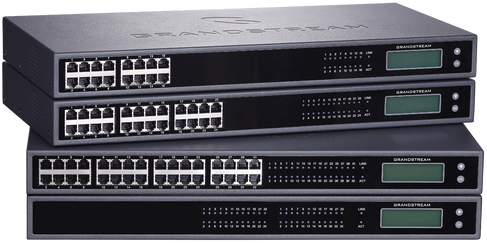
Some installs will never go all-in on IP phones. A machine shop keeps its old analog desk sets because they are bolted to the wall and the forklift driver likes the handset. A hospital keeps nurse-call panels wired to RJ11 runs that were pulled in 2004. A school keeps the fax machine by the front desk because regulations say a fax machine must exist. That is where a high-density FXS gateway earns its rack unit, and the Grandstream GXW4200 v2 series — the GXW4216, GXW4224, GXW4232, and the 48-port GXW4248 — is the box I reach for when the analog tail gets long.
I have deployed these behind UCM6300s, behind hosted SIP trunks, and behind third-party soft-switches. Here is everything the official Grandstream datasheet says about the platform, plus how it behaves in a real wiring closet.
Verified Specifications: GXW4200 v2 Series
All specs below come from Grandstream’s official GXW4200 v2 datasheet and product page.
| Feature | Grandstream GXW4200 v2 series |
|---|---|
| FXS ports | 16 / 24 / 32 (GXW4216/4224/4232); GXW4248 uses 2 x 50-pin Telco connectors for 48 ports |
| Network | 1 x 10/100/1000Mbps auto-sensing RJ45 (Gigabit on the v2) |
| Display / LEDs | Backlit graphic LCD with multi-language support; Power, LAN Link, LAN Activity, and per-port connection LEDs |
| SIP | SIP (RFC 3261) over UDP/TCP/TLS; 4 SIP server profiles per system, independent SIP account per port |
| Codecs | G.711, G.723.1, G.726-32, G.729, G.722 wideband, iLBC, Opus; 16kHz wide-band sampling support |
| Fax | T.38 Group 3 Fax relay up to 14.4 kbps with auto-switch to G.711 pass-through; V.17/V.21/V.27ter/V.29 data pumps |
| Voice quality features | Carrier-grade window-based echo cancellation, dynamic jitter buffer, modem detection with auto-switch to G.711 |
| Telephony features | Caller ID display/block, call waiting, blind and attended transfer, call forward, DND, 3-way conferencing per port, last call return, paging, MWI with stutter tone, auto-dial |
| Caller ID formats | Bellcore Type 1 & 2, ETSI, BT, NTT, DTMF-based |
| Disconnect methods | Busy tone, polarity reversal/wink, loop current |
| Loop reach | Up to 6000 ft on 24 AWG at 2 REN |
| QoS / protocols | DiffServ, TOS, 802.1p/Q VLAN tagging; TCP/UDP, RTP/RTCP, HTTP/HTTPS, DHCP, DNS, NTP, TFTP, PPPoE, STUN, LLDP |
| DTMF | In-audio, RFC2833, and/or SIP INFO (flexible per trunk) |
| Provisioning | TFTP, HTTP/HTTPS, FTP/FTPS, TR-069, GDMS; zero-config with Grandstream UCM series |
| Security | SRTP, TLS/SIPS, HTTPS (AES-128), secure boot, unique certificate and random default password per device, dual firmware images |
| Management | Web GUI, SSH, syslog, voice prompts, TR-069, GDMS cloud |
| Power | GXW4216/24/32: 12VDC 5A (max 60W). GXW4248: 24VDC 6.25A (max 150W). Universal 100-240VAC input |
| Size / weight | GXW4248: 440 x 255 x 44 mm (1U), 3.36 kg. Smaller models: 440 x 185 x 44 mm (1U) |
| Environment | Operating 0-40°C, storage -10 to 60°C, 10-90% humidity non-condensing; ITU-T K.21 over-voltage/over-current protection |
What It Actually Does on a Job
The GXW4200 sits between your VoIP world and the analog tail. Every FXS port presents a dial tone to an old phone, fax machine, courtesy phone, elevator phone, credit-card terminal line, or nurse-call zone — and registers each port as its own SIP extension (or presents the whole gateway to the pbx as blocks of extensions, depending on how you provision it). The v2 refresh matters most for two reasons: the network port is now true Gigabit, and the security stack — secure boot, per-device certificates, random default passwords, dual firmware images — finally matches what enterprise buyers expect in 2026.
The port count is the pitch, so plan it properly. The 16, 24, and 32-port models mix RJ11 ports with 50-pin Telco amphenol connectors; the GXW4248 goes all-in on two 50-pin blocks. If your analog runs land on a 66 block, the 48-port chassis is dramatically cleaner: two amphenol cables in, and the whole punch-down field is now one gateway. That alone is why I size up from 32 to 48 whenever more than about 30 pairs terminate.
Loop reach of 6000 feet on 24 AWG at 2 REN means legacy wiring distance is basically never the problem — the building burns down before the gateway loses the loop. The per-port LEDs are deceptively useful for troubleshooting: a port LED flickering off-hook during a quiet night shift is an old phone with a stuck hook switch, and you find it in minutes instead of hunting every jack.
For provisioning, GDMS is free and handles batches: firmware upgrades, config deploys, monitoring, and alerting across sites from one cloud dashboard. On a multi-site job — say a dealer with four branches — you provision once by serial number and never truck-roll for a dial plan change. If your customer bans cloud management, the same gateway still takes TFTP/HTTPS XML or TR-069 from your own server, and the local GUI is complete. It also zero-configs against UCM series IP PBXs if you sell the whole stack.
Fax and Modem Reality Check
Be honest with yourself about fax-over-VoIP. T.38 relay up to 14.4 kbps with automatic G.711 pass-through fallback, plus modem detection with auto-switch, is the best you will get from any FXS gateway, but fax machines are fax machines. My install notes: pin the fax ports to G.711a/u with disable-vad, turn jitter buffer up, disable silence suppression on those extensions, and test a real page across the real WAN path at commissioning — not after the office manager’s first failed insurance form. If fax is mission-critical, keep one physical analog line as a lifeline and route the gateway’s failover behind it.
Pros and Cons
Pros:
- Density — 48 analog ports in 1U with dual 50-pin Telco terminations is the whole reason this box exists.
- Gigabit uplink on the v2, so the gateway is never the choke point for 48 concurrent G.711 calls.
- Modern security floor: secure boot, unique per-device certificate, randomized default password, dual firmware images, SRTP/TLS.
- Per-port SIP accounts and 4 server profiles mean split-dial-plan jobs (local PBX for phones, failover trunk for emergency lines) are a checkbox, not a hack.
- Free GDMS cloud provisioning, or fully local TR-069/XML if cloud is banned.
- Wideband codec support including Opus and G.722 on analog endpoints — the old phones still dial analog, but the trunk side can be HD.
- ITU-T K.21 surge protection matters on long outside loops; storm season is unkind to FXS ports without it.
Cons:
- Single Gigabit port with no link aggregation or second NIC — the uplink is a single point of failure for all 48 lines.
- The 48-port model has no internal PSU; the brick (24VDC, 6.25A) is external and needs a place to live in the rack.
- No PoE pass-through concept here — these are desk/legacy-analog devices; you still need jacks, phones, and their own power for the endpoints.
- Lifecycle reality: analog hardware lines are shrinking industry-wide. The v2 is current and shipping, but plan the day these eventually retire to pure IP endpoints.
Where It Fits Best
- Hybrid migrations: Move the phones to IP one floor at a time and park the surviving analog — faxes, alarm lines, courtesy phones — on a GXW4224 so you bill one cutover instead of three.
- Industrial and healthcare: Long cable runs, heavy industry, nurse call, elevator phones. The 6000-ft loop reach and K.21 protection exist exactly for this.
- Multi-site SMBs on a hosted voice platform: GDMS zero-touch across branches with per-port SIP credentials keeps every location accountable to the same PBX.
- Legacy PBX rescue: Keep the existing analog PBX as an emergency/fax island behind the gateway while the primary system goes cloud. If SIP dies, the fax still answers.
Bottom Line
The GXW4200 v2 is not glamorous, and that is the point. It is a workhorse that lets a modern SIP system inherit an analog building one punch-down block at a time, and the 48-port GXW4248 specifically is the cleanest way to collapse a messy 66-block into a single managed, secure, provisionable device. The v2’s Gigabit port and secure-boot/security-certificate baseline close the gaps the older generation left open. If your install has more than a handful of surviving analog lines, put a GXW on the BOM and quote it with confidence — and if the analog tail is really 200 pairs deep, this platform is why you can still say yes.
Specifications sourced from Grandstream’s official GXW4200 v2 product page and datasheet at grandstream.com. Product imagery courtesy of Grandstream Networks.
Need a hybrid analog/VoIP cutover quoted for your site? Get in touch — I spec these every week.