
Grandstream GXP2170 Review: The 48-Key Desk Phone Built for People Who Live on the Phone
Straight from the official Grandstream spec sheet — no guessing, no reseller folklore. Today we are looking at the GXP2170, the flagships-highest seat in the GXP high-end line, and it has quietly been the phone I reach for on any job where one person lives on the phone all day. 12 line keys, six SIP accounts, 48 on-screen BLF keys and dual Gigabit PoE — this is the desk phone equivalent of a good dispatcher console.
What the GXP2170 actually is
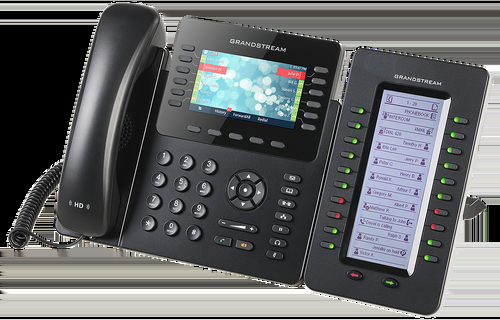
Grandstream pitches the GXP2170 at high-call-volume users — receptionists, administrators, sales staff — and the hardware backs it up. It is a 6 SIP account / 12 line-key phone with a 4.3-inch 480×272 color LCD, 48 digitally programmable BLF/speed-dial keys, integrated Bluetooth, dual switched auto-sensing Gigabit ports with 802.3af PoE, and support for up to four cascaded GXP2200EXT expansion modules. That last point matters more than most people realize: four modules at 20 quick-dial keys each gets one desk to 160 BLF destinations without buying a whole new phone.
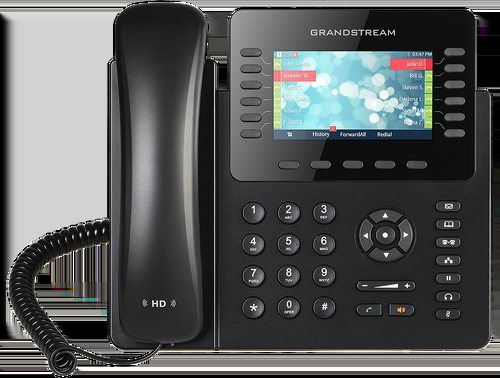
Verified specifications (official Grandstream datasheet)
| Spec | GXP2170 | GXP2160 (little sibling) |
|---|---|---|
| SIP accounts | 6 | 6 |
| Line keys | 12 (dual-color) | 6 |
| BLF / speed-dial keys | 48 on-screen digital | 24 dual-colored |
| Display | 4.3″ (480×272) TFT color LCD | 4.3″ (480×272) TFT color LCD |
| Expansion modules | Up to 4x GXP2200EXT (160 contacts total) | Yes, supported |
| Network | Dual switched 10/100/1000 with PoE | Dual Gigabit with PoE |
| Bluetooth | Built-in | Built-in |
| Audio | HD handset + full-duplex speakerphone | HD handset + speakerphone |
| Codecs | G.711 a/u-law, G.722, G.726, G.729A/B, G.723.1, iLBC, Opus | Same family |
| Security | SRTP, TLS, 802.1x, AES-256 encrypted config, MD5/MD5-sess auth | SRTP/TLS |
| Provisioning | TR-069, AES-encrypted XML, zero-config on UCM, TFTP/HTTP/HTTPS, FTP/FTPS | Same |
| Power | 802.3af PoE or 12V/1A PSU; max 5.4W (9.2W with 4 modules) | PoE |
| Headset | RJ9 jack with Plantronics EHS support + USB | RJ9 + USB |
| Conferencing | 5-way audio | 5-way audio |
| Other | SCA/BLA, call park, hot desking, LDAP/XML phonebook (2000 entries), 500-entry call log, LLDP/CDP/SNMP, IPv6, 5 XML softkeys, 5-way nav keys, 11 dedicated function keys | Similar set |
Install notes from the field
Where it earns its keep: front desks and dispatch. If a station has more than eight live appearances or a receptionist who blind-transfers all day, the 48-key grid changes how fast they work. It is also the correct answer for any exec suite on a UCM6300 — the zero-config provisioning means you touch the phone once out of the box and it adopts itself.
Power planning: at 5.4W a pop on 802.3af, one phone is nothing — but if you are hanging four GXP2200EXT modules off one unit you jump to 9.2W total draw. That still fits PoE+, but count it across a 24-port switch when half the ports have module-equipped phones. Budget on the switch, not on luck.
Bluetooth in practice: the built-in BT syncs mobile contacts, calendars and can hand a mobile call over to the desk handset. On a job I wire a lot of Plantronics EHS headsets instead — the RJ9 EHS path is more reliable than BT for all-day wear, and the headline still seizes the headset on an incoming call.
Provisioning reality: TR-069 or AES-encrypted XML both work fine at scale. If you are on a Grandstream UCM/GCC platform, use the zero-config path and skip the argument. On third-party SIP platforms, standardize early — the phone supports an enormous menu of options and every installer on the crew will invent their own template if you let them.
Build in a side-by-side decision
Pros:
- 48 native BLF keys plus 160 total with expansion modules — nothing else in the GXP line goes this deep without a module
- Dual real Gigabit ports with PoE — pass-through networking at full speed, noInjector needed
- Opus wideband codec support end to end, SRTP/TLS/802.1x security stack
- Proven provisioning pipeline at fleet scale (TR-069, AES-XML, zero-config on UCM)
- Modest 5.4W draw keeps it friendly to crowded PoE budgets
Cons:
- Physical keypad grid is large on the desk — it is a dispatcher phone, not a minimalist’s desk toy
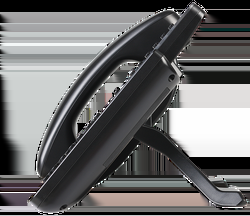
- Wall mount is sold separately (both stand angles fine, but order brackets at the same time as the phones)
- If a station only needs two lines, the GXP2160 does almost everything for less — buy the key count you will actually light up
How it fits a real deployment
On a typical multi-station job I run the GXP2170 at the two or three positions that touch every call: main reception, dispatch, and the office manager. Everyone else gets GXP2140/GXP2160-class handsets. The 2170 becomes the referral console — six SIP accounts lets you park the main hunt group, the after-hours line, and a direct DID all on one physical desk set, and SCA/BLA means two receptionists can pick up each other’s lines without talking over each other. Pair it with a UCM6300-series or GCC convergence box and provisioning is genuinely zero-touch: power on, adopt, done.
The Bluetooth pairing is also what makes it work for people who hop between a cell and a desk all day — a BT headset stays paired to the phone, and incoming mobile calls can route through the desk audio without the user lifting a handset. If your client wears headsets all day, spec Plantronics EHS on the RJ9 side instead and keep Bluetooth as backup; EHS gives you reliable call-seize on an incoming ring, which is the thing cheap Bluetooth headsets always fumble.
One cabling note before anybody quotes it wrong: the dual Gigabit ports are switch-through, so the phone daisy-chains the desktop drop. The GXP2170 takes standard 802.3af, so most PoE switches handle it at full power without special port classes — but if you stack three or four GXP2200EXT modules on a phone, the run pulls up to 9.2 watts. Do your PoE budget math at switch level, not per port assumption.
Who should not buy this phone
If nobody at the station answers more than about 30 calls a day, the key grid is dead weight and the desk real estate matters. Physical buttons are a feature only when they get pressed — the phone is wider and heavier (just under a kilogram) than the low-end GXP units, and on a crowded desk the 48 keys plus optional modules start to look like an air traffic control rig. That is fine in an office; it is comedy in a hot-desking setup. And if your platform is cloud-only with no Grandstream provisioning path, the phone still works fine on standard SIP, but you will be building templates by hand — budget the config time somewhere.
Bottom line
The GXP2170 is Grandstream’s insurance policy phone: when the station count is high, the transfer volume is heavy, or you simply do not know what the client will need lit up by month three, you put the 48-key phone on the desk and change one line item in the quote instead of swapping hardware later. For standard offices the GXP2160 or lower GXP models make more sense — but for the reception desk that runs the building, the 2170 is the one I specify by default. If you want a quote for your station count, get in touch.
Specifications sourced from the official Grandstream GXP2170 product page and English datasheet; product images courtesy of Grandstream Networks (white space trimmed).