
Ubiquiti U7 Pro Review: The Mid-Tier Wi-Fi 7 AP That Quietly Became My Default Ceiling Mount
The Ubiquiti U7 Pro sits in an awkward spot in the UniFi Wi-Fi 7 lineup. It is not the flagship, it is not the budget model, and on paper the spec sheet looks like a step sideways from the Wi-Fi 6 gear plenty of us already installed. But after living with a handful of them on real job sites, this is the AP I keep defaulting to when a customer wants UniFi, Wi-Fi 7, and a price that does not make them wince. Here is the full breakdown, verified specs and all.
What the U7 Pro Actually Is
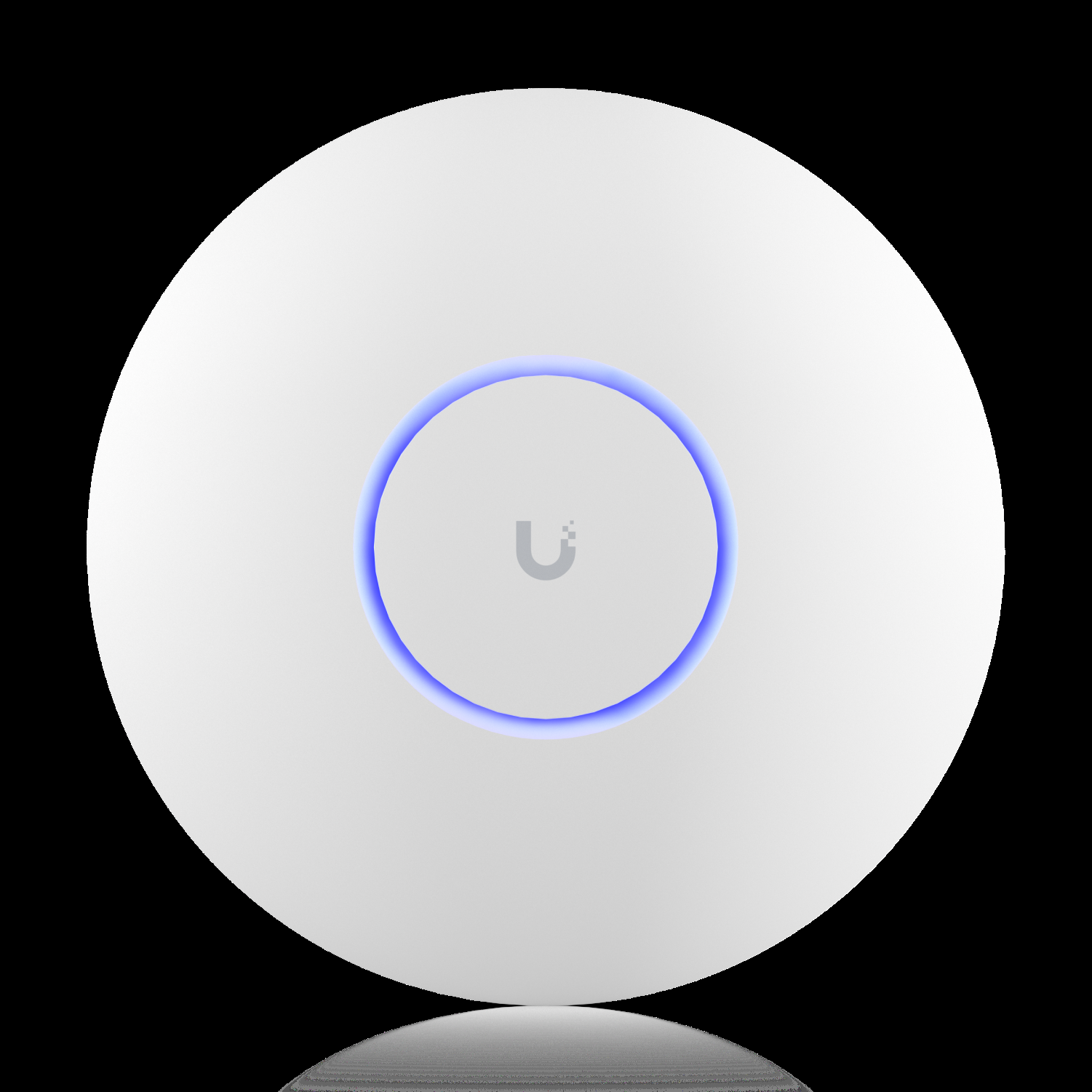
The Ubiquiti U7 Pro is a ceiling-mounted (wall-mountable too) tri-band Wi-Fi 7 access point with six spatial streams — 2×2 on each of the 2.4, 5, and 6 GHz radios — and a 2.5 GbE uplink, powered by PoE+. It ships in UniFi’s current design language, runs on the UniFi Network application (version 8.0.28 or later required), and carries NDAA compliance, which still matters more than a lot of vendors want it to on government and education bid sheets.
Directly from Ubiquiti’s official product page, the verified numbers side by side with the flagship U7 Pro XGS:
Verified Specifications (Ubiquiti Official)
| Spec | U7 Pro | U7 Pro XGS (flagship) |
|---|---|---|
| Wi-Fi standard | Wi-Fi 7 (802.11be) | Wi-Fi 7 (802.11be) |
| Spatial streams | 6 (2×2 per band) | 8 (2×2 / 4×4 / 2×2) |
| Uplink | 2.5 GbE RJ45 | 10 GbE RJ45 |
| PoE requirement | PoE+ | PoE++ |
| Max data rate (6 GHz) | 5.8 Gbps (BW320) | 5.8 Gbps (BW320) |
| Max data rate (5 GHz) | 4.3 Gbps (BW240) | 8.6 Gbps (BW240) |
| Max data rate (2.4 GHz) | 688 Mbps (BW40) | 688 Mbps (BW40) |
| Coverage area | 140 m2 (1,500 sq ft) | 160 m2 (1,750 sq ft) |
| Max client count | 300+ | 500+ |
| Antenna gain (6/5/2.4 GHz) | 5.8 / 6 / 4 dBi | 6 / 6 / 4 dBi |
| Max TX power (6/5/2.4 GHz) | 23 / 26 / 23 dBm | 24 / 29 / 23 dBm |
| Max power consumption | 21W | 29W |
| Dedicated spectral scan radio | No | Yes |
| Zero-Wait DFS | No | Yes |
| Dimensions | 206 mm dia. x 46 mm (8.1 x 1.8 in) | 215 mm dia. x 32.5 mm (8.5 x 1.3 in) |
| Weight | 680 g (1.5 lb) | 800 g (1.8 lb) |
| Mount included | Pro Mount (ceiling/wall) | Lite Mount (ceiling/wall) |
| Voltage range | 44-57V DC | 42.5-57V DC |
| Enclosure | Polycarbonate, metal | UV-stabilized polycarbonate, aluminum alloy |
| NDAA compliant | Yes | Yes |
| US store price | $189 (5-pack available) | $299 |
The Feature Set That Matters on Real Jobs
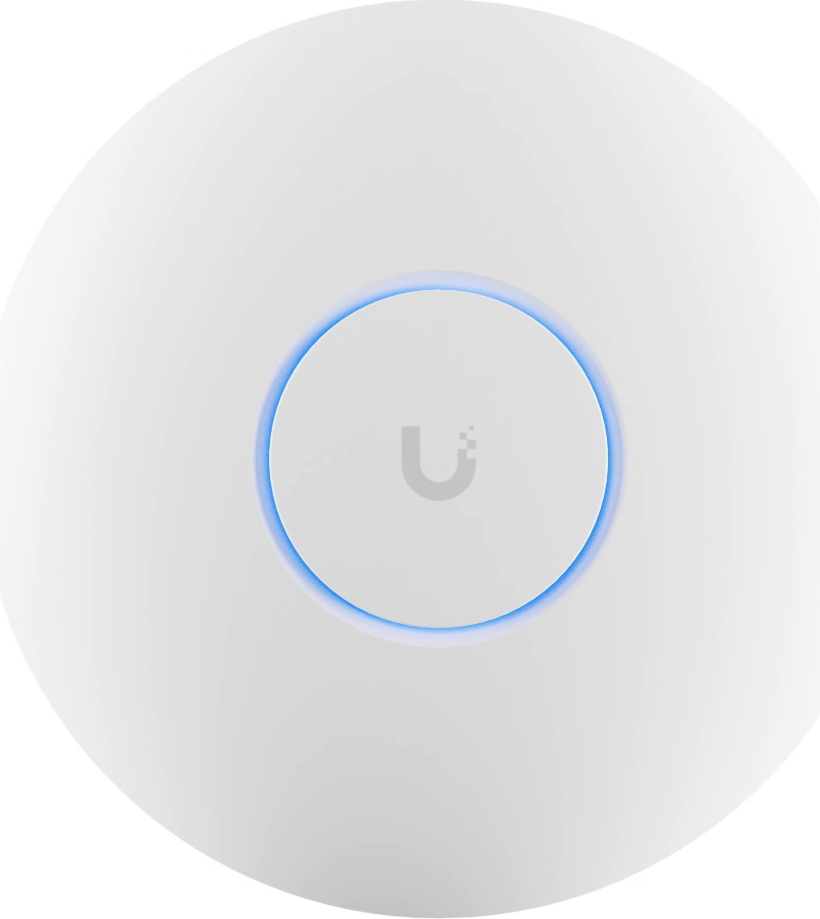
Both radios look similar until you read the feature list. The U7 Pro carries the full UniFi enterprise feature set that actually gets ticked off on install sheets: 802.11k/v/r fast roaming and BSS transition management, band steering, advanced radio management, Passpoint (Hotspot 2.0), PPSK, dynamic RADIUS-assigned VLANs, RadSec, guest isolation, and a captive portal with voucher, payment, and external-portal support. That is the list I care about for hospitality, medical, and multi-tenant work, and it is the same feature list as radios costing nearly twice as much.
Where the U7 Pro Earns Its Slot
Medium-business ceilings with 2.5G switches. The honest truth about Wi-Fi 7 APs from most vendors, Ubiquiti included: a 2×2-per-band radio will never saturate a 2.5 GbE pipe with one client. But in the real world you are servicing dozens of clients through the same uplink, and 2.5 GbE is exactly the sweet spot between what the radio can deliver aggregated and what your PoE switch budget allows. If you are already cabled and switched for 2.5G, the U7 Pro fits without dragging a PoE++ upgrade into the quote.
High-density clients on a budget. The quoted 300+ client capacity lines up with what a tri-band Wi-Fi 7 radio with full 11ax/11ac fallback can handle in a conference center or co-working space when you are steering hard into 6 GHz.
Multitenant and hospitality. PPSK plus dynamic VLANs plus voucher portals on a $189 AP is the pitch, and it is a good one. I ran a small hotel retrofit on the previous generation on exactly this feature set and helpdesk call volume dropped the week we cut over.
Where It Loses to the XGS
Be honest with customers about the gaps:
- Single-gig clients will not feel much difference. The big Wi-Fi 7 jump only shows up on 6 GHz clients, and 2×2 means a high-end phone tops out near the same theoretical rate as a good Wi-Fi 6E AP with three streams. You are buying headroom and density capacity, not a speed upgrade for one laptop.
- No dedicated spectral scan radio on the Pro. The XGS gets real-time spectral analysis and Zero-Wait DFS. If you are deploying dense 6 GHz in a noisy RF environment, or the customer wants spectrum visibility, that feature alone justifies the price jump.
- The 5 GHz radio is the weak leg. 2×2 at BW240 is an odd channel width for a product at this tier — the headline number comes from 6 GHz, and plenty of legacy clients cannot use 6 GHz at all.
- Uplink ceiling. If the switch port is 10G, the U7 Pro caps at 2.5G. Fine for most ceiling drops, not for a dense stadium-style row sharing one uplink.
Pros and Cons
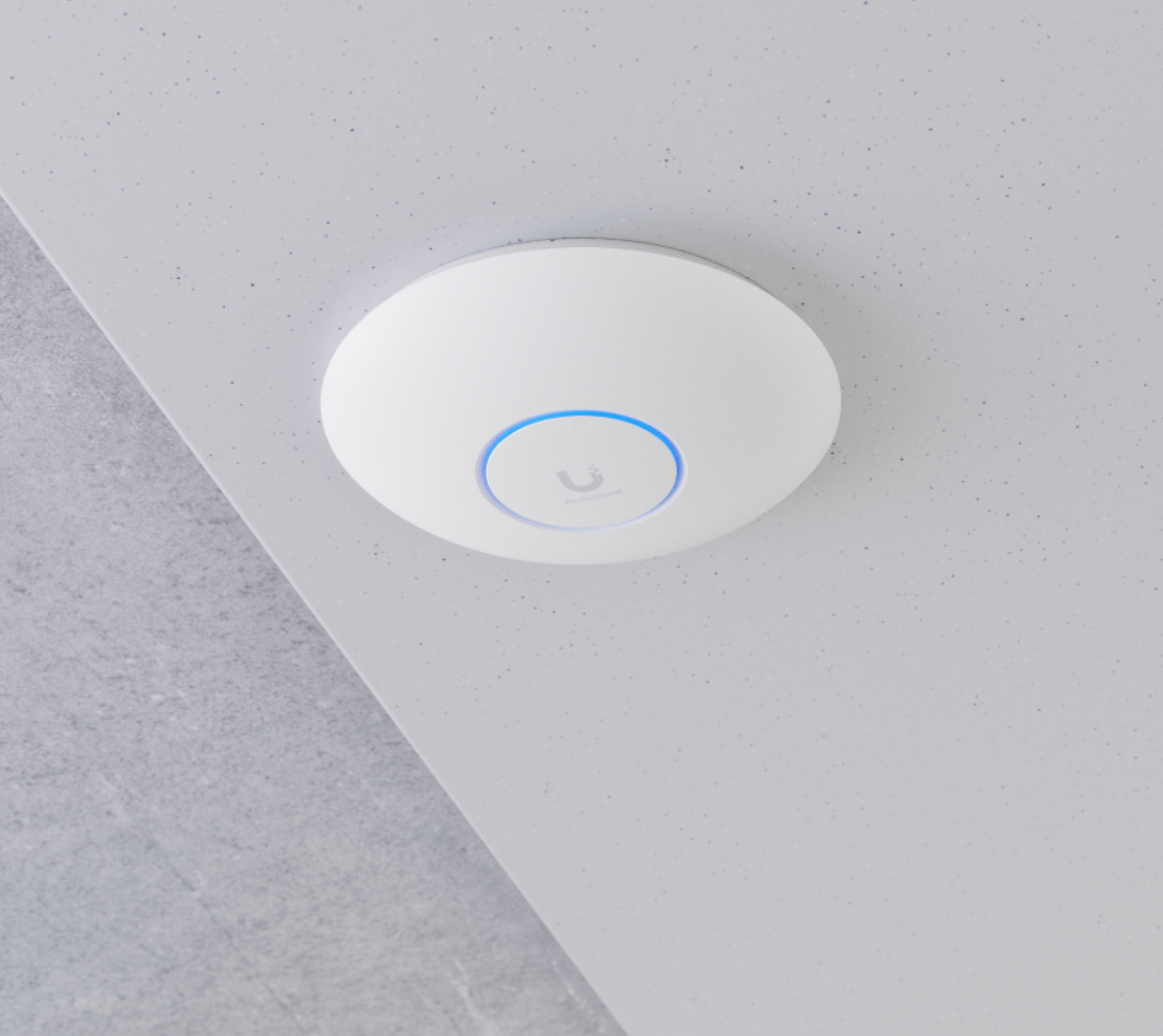
Pros: full UniFi enterprise feature set (Passpoint, PPSK, RadSec, 802.11k/v/r) at the mid tier; PoE+ powered, so no PoE++ switch upgrade needed; NDAA compliant; Pro Mount included in the box; 300+ client capacity; cool and quiet at 21W max draw; 5-pack pricing on the US store helps on multi-drop jobs; UI Care available at $30 per unit for five-year coverage.
Cons: 2.5 GbE uplink only; 2×2 on every band is modest for a radio carrying the Pro name; no dedicated spectral scan radio and no Zero-Wait DFS — those are flagship features; 6 GHz operation is limited to Ubiquiti’s published country list, so verify before international jobs.
Bottom Line
The Ubiquiti U7 Pro is the AP I spec when the customer wants Wi-Fi 7 on a UniFi stack, the switch layer is 2.5G PoE+, and nobody is going to audit whether they got the flagship radio chains. The extra $110 for the U7 Pro XGS buys 10GbE, four spatial streams on 5 GHz, and spectrum scanning — real features, but only for specific jobs. For the hundred-box schools, hotels, and light-industrial sites I quote most, the U7 Pro clears the bar and the invoice clears faster. It has earned its place as my default ceiling mount.
Specifications and pricing verified against the official Ubiquiti US store product pages for the U7 Pro and U7 Pro XGS. All product images courtesy of Ubiquiti.
Need a Wi-Fi 7 design or retrofit on your site? Get in touch — I will size the RF, the switch layer, and the PoE budget before anyone quotes a radio.